

Why Your Dog Still Pulls on the Leash (And the One Thing That Changes It)
Jun 24, 2026
Denise's shoulder had been aching for two weeks before she mentioned it to anyone.
She didn't connect it to Bruno. Why would she? Bruno was sixty pounds of golden retriever enthusiasm, and walking him was just what walking him looked like. He surged toward every smell, every squirrel, every stranger with a dog of their own. She leaned back, dug her heels in, and muscled through it. Twenty minutes, twice a day, every single day. She'd stopped noticing the tug-of-war the way you stop noticing a hum in the next room.
Then her physical therapist asked a question that had nothing to do with her desk job.
"Do you walk a dog?"
"Every morning. Why?"
"Because that's a leash injury. I see two or three of these a month."
Denise went home and watched herself walk Bruno with new eyes. He wasn't being bad. He wasn't being stubborn. He was doing exactly what his body told him to do, and her body had been absorbing the cost of it for over a year.
The Reason Your Dog Pulls Has Nothing to Do with Manners
Here's the thing nobody explains at the pet store. Pulling isn't a behavior problem in the way we usually think of behavior problems. It's a reflex.
When something pushes against a dog's body, his instinct is to push back into it. Trainers call it the opposition reflex, and it sits below the level of choice. The collar tightens against his neck, his neck pushes back against the collar, and the harder you pull, the harder he pulls. You're not having a disagreement. You're in a physics problem, and you're losing it one walk at a time.
That's why the dog who "knows better" still drags you toward the mail carrier. That's why "heel" works perfectly in the living room and evaporates the second the front door opens. He's not ignoring the lesson. His body is answering a different question than the one you're asking.
What Most of Us Try Next (And Why It Doesn't Work)
Let's be honest about the things we've all reached for. A shorter leash. A tighter grip. A sterner voice. A collar with a little more bite to it, on the theory that more correction equals more compliance.
Here's the irony. Most of those fixes add pressure to the exact spot that's already triggering the reflex. You're not turning the dial down. You're turning it up, then wondering why the dog leans into it harder. The dog isn't broken. The setup is.
And the stern voice? It holds up about as well as you'd expect against sixty pounds of dog who has just located a squirrel.
The One Thing That Actually Changes It
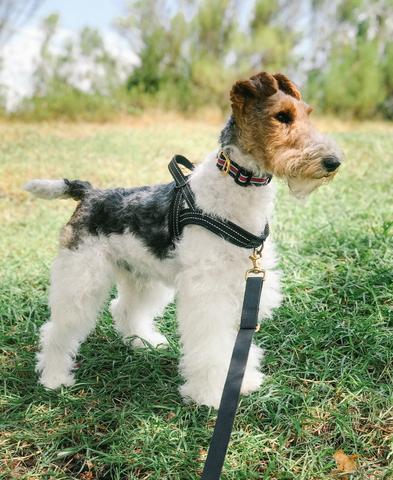
The fix isn't more force. It's a different point of contact.
A front-clip harness moves the connection from the back of the neck to the center of the chest. When the dog surges forward, the leash gently turns him back toward you instead of letting him drive straight ahead against the collar. There's nothing to brace against. The opposition reflex never gets triggered, because there's no straight-line pressure for him to push into. The walk stops being a tug-of-war and starts being, maybe for the first time, an actual conversation between the two of you.
That's the entire idea behind our No-Pull Harness. Front-clip design, padded where padding matters, built to redirect instead of restrain. We didn't design it to make your dog smaller or quieter. We designed it so the walk stops being something you survive and starts being something you actually look forward to.
It's that simple. The dog doesn't need fixing. The setup does.
Denise switched Bruno to a front-clip harness on a Tuesday. By Thursday, she sent me a video. Bruno trotting beside her, leash slack, both of them looking at the same squirrel without either one moving an inch toward it.
Her shoulder, for what it's worth, finally stopped aching.
What's the walk you dread most with your dog? The mail carrier, the dog on the corner, the squirrel that's claimed your neighbor's oak tree? Tell us about it. There's a decent chance the fix is closer than you think.
Meet the No-Pull Harness
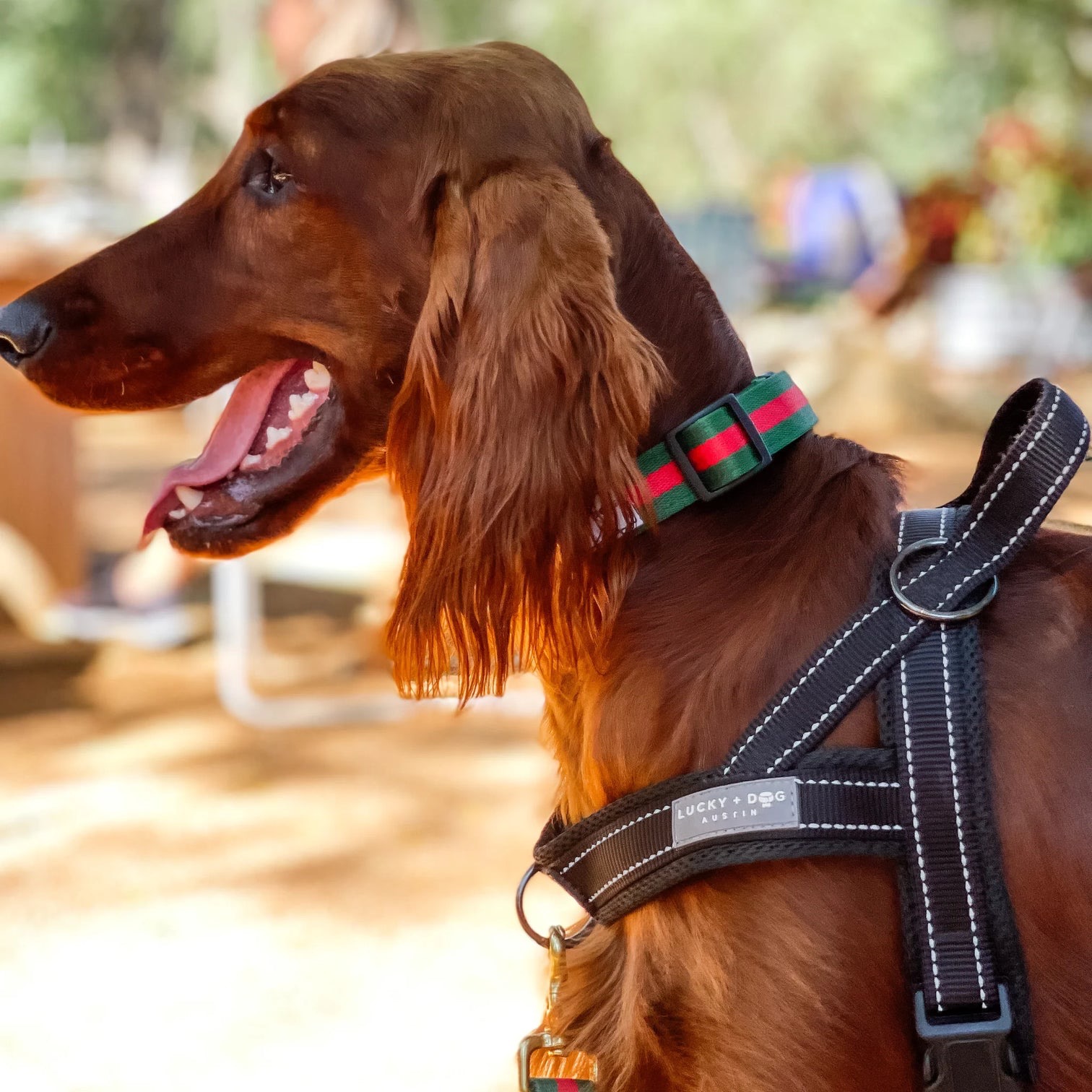
We built it around a single idea: stop fighting the reflex, redirect it. The front-clip sits at the center of the chest, so when your dog surges, the leash turns him gently back toward you instead of letting him drive straight ahead against a collar. It's padded where it presses, reflective for early-morning and after-dark walks, and made to hold up to a real dog on a real walk.
And because it's ours, it carries the part we care about most: every LUCKY+DOG purchase helps support rescue organizations and no-kill shelters. A better walk for your dog, and a little more help for the ones still waiting for theirs.