

It Is Not Too Late to Crate Train Your Adult Dog
Jun 27, 2026
Mabel was six years old and had never seen the inside of a crate.
She came to us from a hoarding case, one of nineteen dogs pulled out of a single house. A gentle hound mix, gray already coming in around her muzzle, the kind of dog who leans her whole weight against your leg the second you sit down. The rescue coordinator was honest with us. "She's wonderful," she said. "But she has never been confined a day in her life, and she does not love the idea."
That was an understatement. The first time we set up a crate in the living room, Mabel took one look at it and walked into the other room. When we tried to encourage her in, she planted her feet and gave us the look. You know the look. The one that says absolutely not, and I'm disappointed you'd even ask.
Everyone we talked to said the same thing. She's too old. That ship has sailed. You can't teach an adult dog to settle in a crate when she's spent six years learning to avoid it.
They were wrong. Mabel sleeps in her crate by choice now. Here is how we got there.
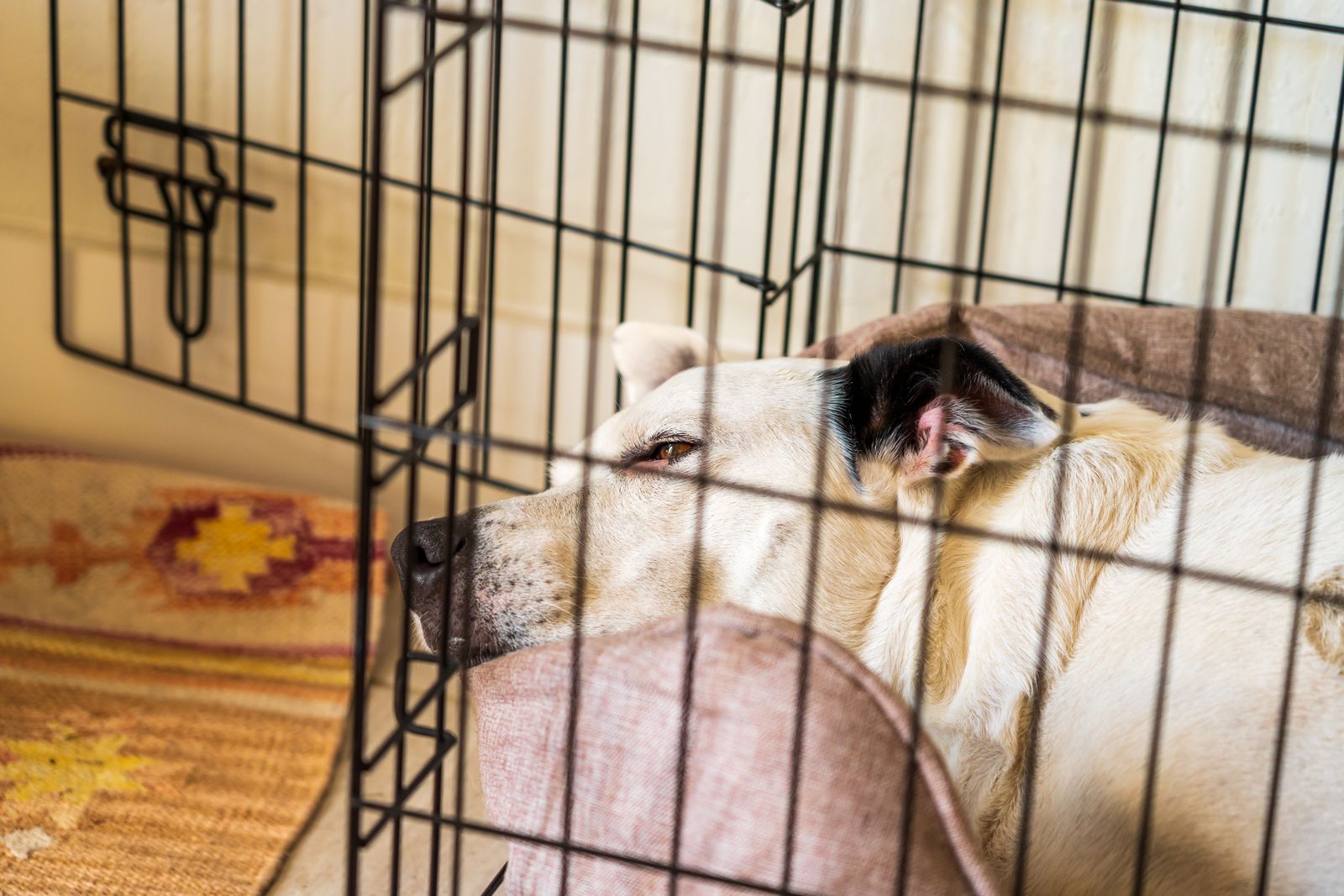
Why Adult Dogs Resist the Crate
First, let's clear up the biggest myth, because it's the one that makes people quit before they start.
Crate training is not a puppy-only skill. Dogs are not like languages, where the window closes at a certain age. An adult dog can learn to love a crate at three, at six, at ten. What changes with age isn't the dog's ability to learn. It's the amount of history you're working against.
A puppy comes to the crate with a blank slate. An adult dog comes with six years of associations, and if those years didn't include a crate, the crate is a brand-new and slightly suspicious object that appeared in their home for no reason they understand. If those years included a bad crate experience, you're working against something stronger than novelty. You're working against fear.
That's the real reason adult dogs resist. Not stubbornness. Not age. History. And the good news about history is that you can build new history right on top of the old.

The other thing people get wrong is reading the resistance as a verdict. Mabel walking away from the crate wasn't her telling us "I will never do this." It was her telling us "I don't know what this is yet." Those are completely different statements, and only one of them is permanent.
The Slow Introduction Method
Here is the part nobody wants to hear. The thing that works is slow. Genuinely slow. Slower than you think you have patience for.
The single biggest mistake with an adult dog is treating the crate like a destination you need to get them into. You don't. You treat it like a piece of furniture you want them to have feelings about, and you let those feelings build one good experience at a time.
Start with the door off or tied open, and the crate just sitting there in a room the dog already likes. Not the garage. Not a back bedroom. Where the family is. For the first few days you are not asking the dog to do anything at all. You are letting them discover that the crate is boring and safe and not going to grab them.
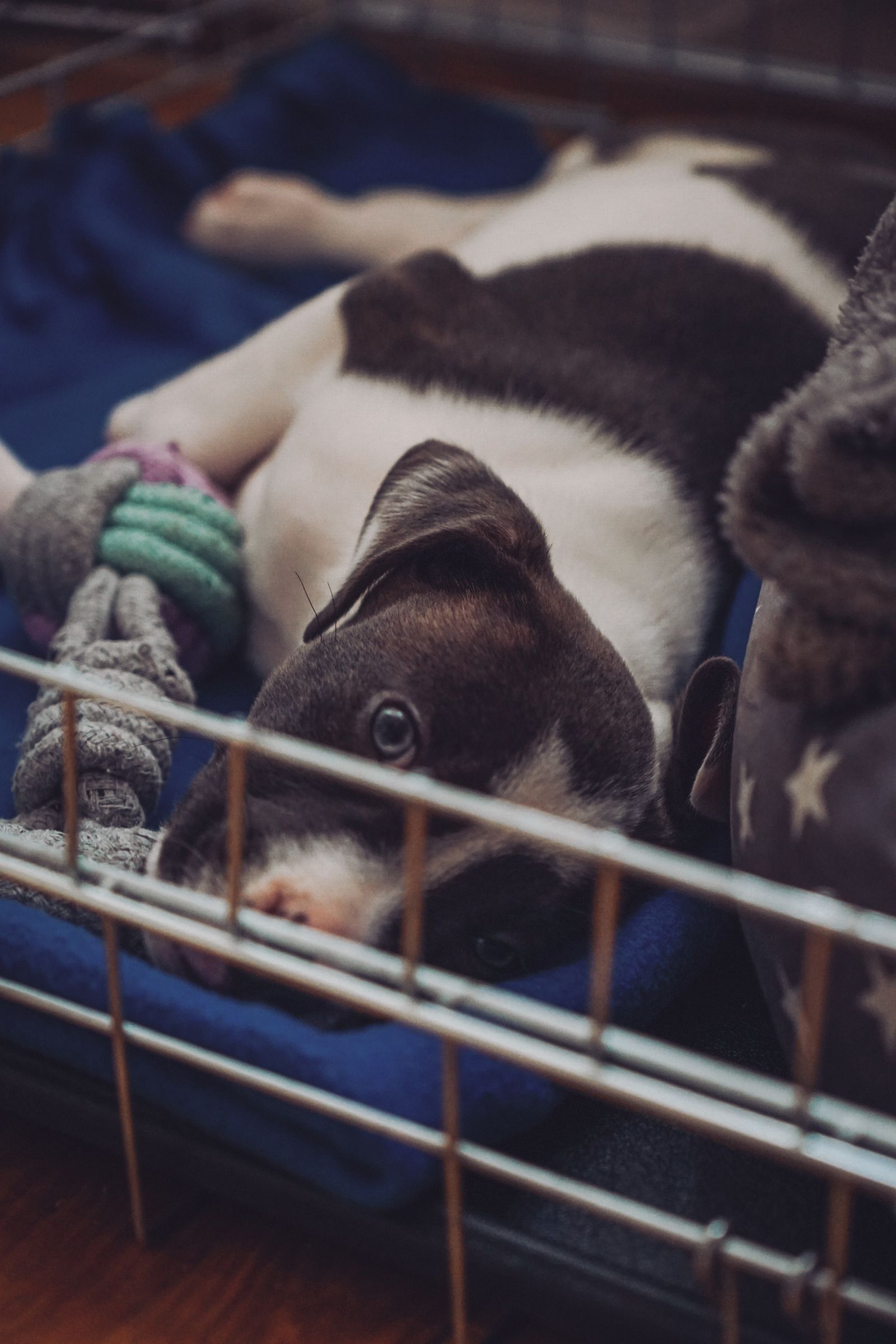
Then you make the crate the best real estate in the house. Every good thing happens near it, then inside it. Toss a treat just inside the door and let the dog reach in and back out. No closing anything. The dog needs to learn they can always leave, because the fear of being trapped is the whole game. Feed meals at the crate, then in the doorway, then at the back. Drop a chew inside and walk away. You want the dog choosing to go in on their own before you ever think about the door.
When the dog is walking in freely and lying down, you close the door for three seconds and open it again before they react. Then five. Then ten. You build duration the same way you'd build it for any anxious behavior, in increments small enough that the dog never has a reason to panic. If they get worried, you went too fast. Back up a step. There's no penalty for backing up. There's a big penalty for pushing through.
The whole arc, done right, is calm and almost boring. That's the sign it's working.
What to Never Do
A few things will undo weeks of progress in a single afternoon. Don't do these.
Never force a dog into a crate and shut the door. Picking up a resistant adult dog and pushing them in confirms every fear they had. The crate becomes the thing that traps them. You can lose a month of trust in thirty seconds.
Never use the crate as punishment. If the crate is where the dog goes when they're in trouble, it will never be where they choose to go when they're tired. Those two jobs cannot live in the same box.
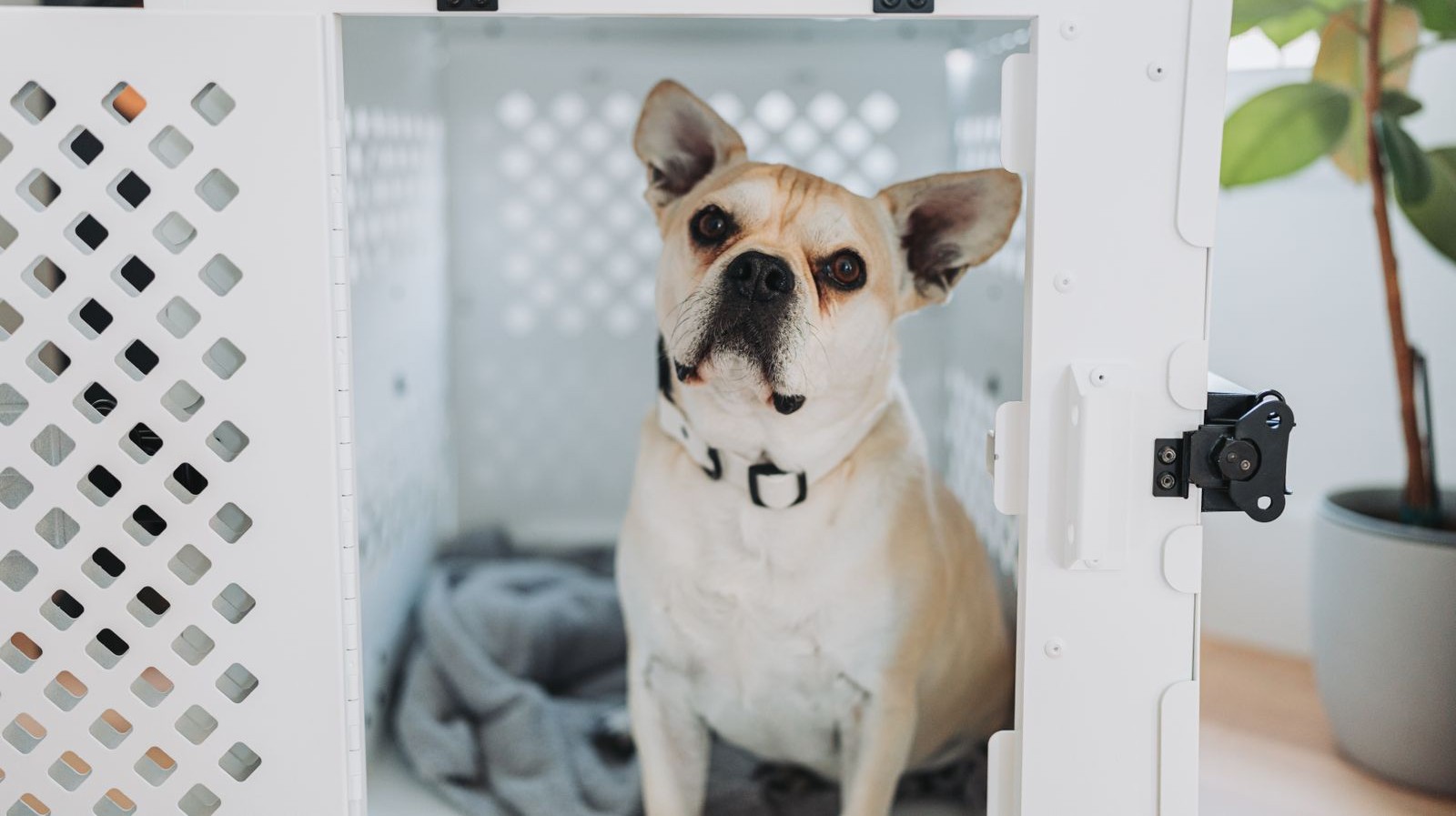
Never crate a dog all day. A crate is a bed and a safe room, not a storage solution. An adult dog should not be confined for eight or nine hours straight, and a dog who's crated too long will come to resent the crate no matter how careful your introduction was.
And never rush the door. Closing the door before the dog is comfortable going in on their own is the most common way good progress falls apart. The door is the last step, not the first.
One more, specific to adult rescues. If your dog shows real panic in the crate, not just reluctance but genuine distress, drooling, frantic escape attempts, hurting themselves, stop. That can be separation anxiety, which is a panic disorder and a different problem than crate training. Forcing a crate on a dog in that state makes it worse. That's a moment to talk to a trainer, not to power through.
How Long It Actually Takes
Let's set an honest expectation, because the fake timelines are why people give up.
A puppy might be comfortable in a crate in a week or two. An adult dog with no crate history usually takes a few weeks of short, consistent sessions. An adult dog with a bad crate history can take a couple of months, and there will be days that feel like you're going backward.
That's normal. Progress with an adult dog is not a straight line. It's a general upward drift with plenty of dips, and the dips are not failures. They're just Tuesdays.
Mabel took about ten weeks. There was a stretch in the middle where I was sure it wasn't going to happen, where she'd go in for dinner and then refuse to go in for anything else. We slowed down. We stopped asking for so much. And then one evening, with no fanfare at all, she walked into her crate on her own, turned around twice, and lay down with a sigh while we watched TV.
Folks, that's the whole thing right there. Not a dog who tolerates the crate. A dog who chooses it.
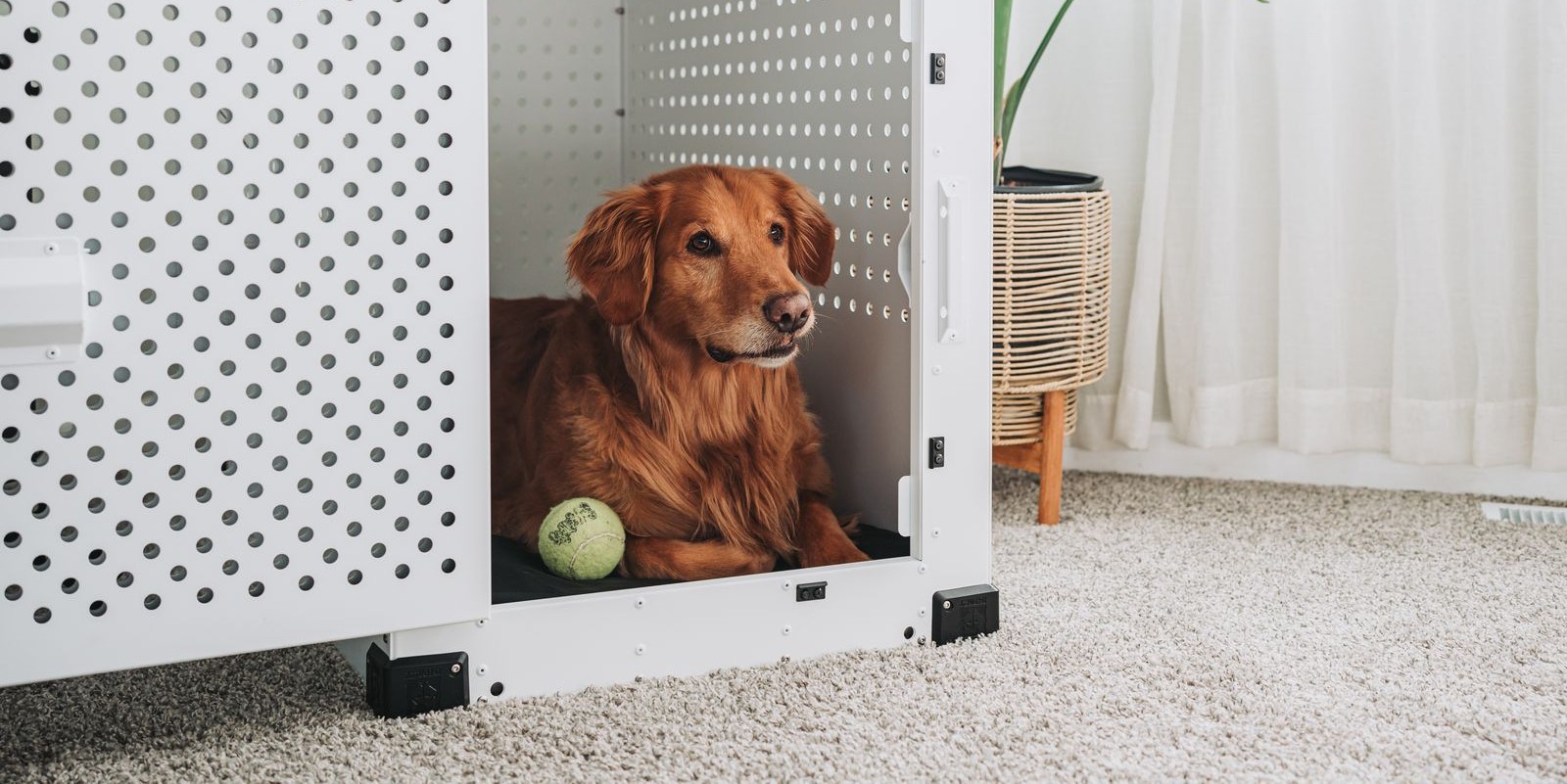
If you've been told your adult dog is too old to crate train, you've been told something that isn't true. The history is real and you have to respect it. But you can outlast it. Go slow, never force it, and give it weeks instead of days.
Are you working on this with an older dog right now? Tell me where you're stuck in the comments. And if your dog's crate resistance looks more like panic than stubbornness, say so. That's a different conversation, and an important one.